Showing posts with label Query Letter. Show all posts

Friday, September 5, 2014

Be Not Afraid

I used to be so good at blogging. I just fell off the wagon for a while. But today's writing tip is something I've been thinking about a lot, lately. Enough that I actually remembered to get on and blog about it.

It's natural to be afraid of failure. I imagine this comes from an ancestral fear of the crop dying, or the hunt being unsuccessful. Being unable to eat is, indeed, a failure of dire consequences.

Even today, failure is not a pleasant experience. It hurts to see so much work go to waste, when a project doesn't work out. And sometimes, for those artistic souls among us especially, the amount of food in our house really does hinge on the level of success we achieve.

But failure is also the mother of improvement. Very few ravenously successful inventions or ideas have reached such prestige in their rough draft forms. To use a somewhat cliche example, Thomas Edison didn't hit on the right lightbulb formula on his first try. Or even his first dozen tries.
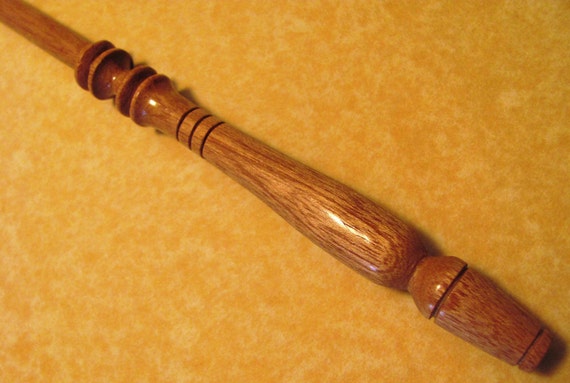
I didn't make an awesome Harry Potter wand the very first time I picked up a stick of wood and a knife. In fact, I'm a little flabbergasted at the rudimentary level of work, whenever I see those first tries. My wands look like they do now through an enormous amount of trial and error. Many attempts got scrapped in the process. And, even better, many became something else. A newer, prettier, more excellent idea that never would have happened without total failure on some front or another.

Like both of these. They actually were supposed to be something completely different, but accidents happened, and I had to improvise. The end product ended up being much better than the original concept. (Although the cheap phone pics don't at all do them justice, unfortunately.)

History is rife with examples of this, so I won't sit here and list them all. Doing that won't convince anyone anyway. Because we've all heard it before. The straight truth is that it's hard to not be afraid of failure. I get that. But

FAILURE IS NOTHING TO BE ASHAMED OF.

In the realm of writing, this is as applicable as anywhere. I have multiple friends in multiple places around the world who have expressed similar sentiments.


But what if they don't like it?


What if they think I'm no good?



I just don't think I could take that kind of rejection.


I mean, if you're cool being George 1.0, that's fine, I guess. See you in 30 years, still wearing 90's hair, dead end job, and probably watching old Friends reruns. I'm off to try to be successful. Even if I don't make it, I'll be in a better place than that. And I'll be happy as I do it.  

I think my point is quite clear, here. You can't possibly know what you're capable of if you avoid any and all risk. You'll never change, never grow, and never get anywhere.

Dreams can only be realized through the risk of failure.

Weird concept, but a true one. Risk begets results. Hiding begets... well, George 1. Sometimes those risks work out, and sometimes they don't. But they for sure won't work out if you don't take them. Why guarantee failure when you can reduce the chances of it by a solid 50%?

No one's first ever story is Tolkien. Not even Tolkien's. No one knows just how NANOWRIMO will be the first time they get themselves into it. Even Rowling got rejection letters. But all of those failures build you into who you are. You won't be much of anyone without them.

-Afraid of NANO because what if you don't make it? SO WHAT? You'll have learned a great deal about your writing process. You'll have experimented with new ways of writing (which might end up really working for you.) You'll have grown emotionally by putting yourself out there. And who knows. You might actually make it, and then you'll have accomplished something. There's nothing so good for the soul as succeeding at something totally crazy.

-Afraid of querying agents, because what if they say no? SO WHAT? If they say no, are you any worse off? On the contrary, you'll have learned something about what works and what doesn't, which you can use next time. You'll also learn something about yourself. That first rejection letter really is a critical moment in your life. The way you react will help define the whole rest of your path.

My first rejection really kicked me into gear. Most things I've done thus far usually fall by the wayside when the going gets tough. And to that point, writing was like that too. Casual, lazy, and not really going to go anywhere. And then I got the rejection. Unlike all of the other stuff I'd tried, this rejection sent me careening down a path of "I WILL SUCCEED NO MATTER HOW HARD IT GETS!"

I suddenly knew that I didn't mind the difficulties. I worked harder than ever, and improved enormously. And that never would have happened without the crossroads. If you hit that rejection crossroads and can't take it, well, you're probably in the wrong line of work anyway. And it's good to find that out sooner rather than later. You have to find the thing in your life that you want to work hard for.

-Afraid of showing other people your work, because what if they think you're an idiot? SHOW THEM ANYWAY. Writers aren't islands either. You will stagnate without other people to help you. That's true in any career. And if they do think you're an idiot, then at least you'll know what doesn't work, so you can fix it. (As it turns out, my mother is a spectacular proofreader. She found typos that a dozen other people never saw.)

- Afraid of fear? CAST A PATRONUS CHARM. They're invaluable.

Okay, Okay, I'll let up for now. My point is just that life is meant to be lived. Things are meant to be learned. Mistakes are MEANT to be made.


All I know is that I wouldn't trade all those mistakes for anything. Sure, they hurt at the time. But I don't want to go back to being that same old dumb teenager. I'll keep getting awesomer, thanks. 

And on that note, I'll just leave you with this Making of George 2.0 montage.


Wednesday, March 7, 2012

Writer's Horoscope

This is my dailyhoroscope.com forecast for today.

There are restless energies from everywhere and everyone, including you. It may be hard to get down to business and do your work today. If you do not concentrate on the business at hand you may find yourself working late. If you are in sales or some sort of social work, you will make great headway in work production. Mental stimulation from others is the key for you--it is a good idea to cooperate and compromise with others. Any previous doubts you toyed with, regarding the direction of your profession, will be turning toward a most positive direction--success is the name of the game! You have a pleasant disposition toward all you come into contact with and you gain a great deal of focus as a result of this interaction with others.

When I first read this, I think "Wow. That is so applicable to me." I am working late right now. I do have questions about my future profession. And I do brainstorm better with other people than on my own.

Then I look at it a second time and realize that so does most of the rest of the world.

If you really look at the sentences, they're completely devoid of substance.

"There are restless energies from everywhere and everyone." What does that even mean?

"If you do not concentrate on the business at hand you may find yourself working late." Um, yes. Usually things do work that way when you procrastinate.

Then why do they sound so good? Why do so many people swear by them?

Horoscopes are written in a clever way. Every single sentence is as vague as they come. Because it's so vague, it can apply to almost anyone.

At the same time, we are well aware of the trials and successes that we're currently dealing with. Because those thoughts are so active in our minds, our brains automatically use them to interpret the horoscope in a way that makes sense to us.

This technique works for horoscopes because the readers already know the story.


Don't Do This.

Sometimes writers will also craft paragraphs of meaningless vagueties. But a writer's job is to tell us a story that we don't already know. And if we don't know it, those sentences will continue to be meaningless.

A young girl lives a hard life. Nothing comes easy, and nothing comes without a price, especially when the girl must put her life on the line in order to save her sister. Thrown into a life-or-death contest, she struggles to survive. And the fight isn't just about food or water. Who should she trust? There are enemies everywhere, and one wrong move could cost her everything. 

It sounds good, but doesn't tell us anything. What makes her life hard? What happened to her sister? How will she save her? What kind of contest is it? We don't even know what genre this story is. It could apply to practically anything. (We won't even go into the cliches.)

Compare it to this:

Starving to death is a common occurrence, but Katniss Everdeen beats the odds. She keeps her family alive by being tough and good with a bow. But starvation isn't the only danger in District 12. Every year, two teenagers from each district are thrown into an arena where they are forced to fight to the death. Only one can survive. Katniss will need more than good odds if she wants to get home alive. The Hunger Games are about to begin.

Don't judge my cover copy too harshly. I'm not Suzanne Collins. But can you see the difference? In this one we get who she is, what she's like, where she lives, what is happening to her, and what the stakes are, all without sacrificing the dramatic phrasing.

Have I mentioned how hyped I am for this movie? 

Once you know that the blurb is about the Hunger Games, the first one makes sense. And that's how we see our own writing sometimes. When we know the story, we know what each sentence means, even when it's terrible and confusing.

Clear and well constructed sentences are crucial to good writing. Rhythm and cadence are just as important as grammar and spelling.

You don't have an unlimited word count here. Make every sentence mean something.

Thursday, March 1, 2012

Query Letters and Shark tanks

If you're just starting out, you may ask "What is a query letter?"

Query letters are a short blurb for your novel. It's basically like back cover copy. That brief thing that people glance over when deciding if they want to read your book.

The query is what an agent or a publisher will see. It has to be clear, short, and compelling enough to make them want to read your manuscript.

I know, they really are a pain in the royal caboose. It's hard to condense a 100,000 word narrative into a 250 word burp. It's even harder to make it any good.

You may also ask "Do I really need one? Can't my story just live or die by virtue of its amazingness?"

No. No it can not.

See, agents and editors are super busy people. They can't read manuscripts from every Tom, Dick, Harry, Joe, and Rutherford. They only have time for one page (if even that.) If they can't see potential after that one page, they move on.

Fair or not, such is life.

My first query letter was a monstrosity. 2,158 words.

Every time I open the file, I shudder. I'm thoroughly embarrassed that I let something that bad get seen by anyone. And I'm extremely un-surprised that I got that form rejection letter. (See tomorrow's post for more about rejections.)

I don't claim to be the world's leading expert on query letters. But luckily for all of us hapless newbies, there is a most wonderful and magnificent blog which is entirely dedicated to the perfecting of query letters.

Ladies and Gentlemen, I introduce you to the shark tank:

http://queryshark.blogspot.com

This blog will be your best friend. It is run by an agent who spends much of her free time disemboweling query letters, purely out of the goodness of her heart. (Or maybe out of ravenous hunger and sarcasm.)

Unless you want to become shark bait (ooh ha ha) you WILL follow these rules when treading in the shark infested waters:


  • Read all of the archives. Yes, I said all of them. There are over 200. But I'm up to about 135, and I'm still learning new things from them. Just do it.
  • Follow the advice. (Some people seem to think that the rules don't apply to them. These people often become chum.)
  • If you want to submit a letter, FOLLOW THE DIRECTIONS. It isn't that hard to do. And t'would seem common sense, but for that pesky little thing called the 'brain'. Some people don't use them. Alas.

As I said, there are over 200 posts on query shark. Getting through them won't be a walk in the park. But if you're even semi-serious about your writing, just do it.

In the mean time, though, here are a few very, very basics to get you started on the right path. 

  • Don't go over 250 words. Ever.
  • White space: use it. Break up your paragraphs so that people don't get migraines just from looking at your letter. 
  • Include a few basic things: WHO the story is about, WHAT their problem is, and WHAT the stakes are if they don't fix their problem. These are absolutely crucial. 
  • Wordy epistles of flowery prose will not sell anything. (See previous bullet.) Clarity always. 
  • EDIT
  • EDIT AGAIN
  • Read Query Shark